Fragrance Oils for Lotions and Skincare (Skin-Safe)
Jump to
- Is Fragrance Oil Safe for Skin?
- How to Add Fragrance to Lotion
- Add Fragrance During Cool-Down
- Frequently Asked Questions
There's something satisfying about finishing a lotion recipe with a fragrance you love. That scent lingers long after you apply it, which is exactly why choosing the right fragrance oil matters. Unlike candles or wax melts, lotions stay on your skin for hours, so it's worth taking a few extra minutes to confirm you're using the right fragrance at the right percentage.
Fragrance oils can be used in lotions and other leave-on skincare products, but only if they're approved for skin use and used within their IFRA leave-on limit. Checking those two things before you start helps you create body products that smell wonderful and stay within the recommended usage guidelines.
This guide explains how to identify skin-safe fragrance oils, how much fragrance to use in lotion, and how to add it without disrupting your emulsion. If you'd like a broader look at fragrance oils across different projects, our fragrance oils guide covers candles, soap, diffusers, skincare, and more.
Is Fragrance Oil Safe for Skin?
Some fragrance oils are designed for products that never touch your skin, like candles or wax melts. Others are approved for leave-on products such as lotions, body butters, body oils, and lip balms.
Before adding fragrance to a lotion recipe, there are two things to check:
- Is the fragrance oil approved for skin use?
- What does its IFRA Certificate allow for leave-on products?
Once you've confirmed both, you're ready to fragrance your lotion with confidence.
Look for a Skin-Safe Fragrance Oil
A fragrance oil labeled skin-safe has been evaluated for products that stay on the skin.
If a fragrance doesn't carry that approval, save it for projects like candles or home fragrance instead, even if it's one of your favorite scents.
Check the IFRA Leave-On Limit
The International Fragrance Association (IFRA) sets recommended maximum usage levels for different product categories.
Leave-on products like lotion have different limits than rinse-off products like soap or shampoo, and those limits vary from one fragrance oil to another. That's why every fragrance oil intended for skincare should include an IFRA Certificate showing its approved usage rate.
A few simple habits make this process easy:
-
Check that the fragrance oil is approved for leave-on products before adding it to your recipe.
-
Review the IFRA Certificate for the specific fragrance oil you're using.
-
Check the certificate each time you make a batch. IFRA standards can change as new safety information becomes available.
How Much Fragrance to Use in Lotion
Once you've confirmed your fragrance oil is approved for lotion, the next step is deciding how much to use.
The answer always comes back to the IFRA Certificate for that specific fragrance oil.
Many skin-safe fragrance oils fall within a range that's commonly used in body lotions, but there isn't one percentage that's right for every fragrance. Some oils are approved at higher levels, while others have lower limits.
The certificate, not a general rule of thumb, should always guide your final percentage.
Here are a few practices that make measuring fragrance much easier:
-
Calculate fragrance as a percentage of your total batch weight, including the water phase, oil phase, and emulsifying wax.
-
Measure fragrance by weight instead of volume for more accurate, repeatable results.
-
Stay at or below the approved leave-on percentage for that fragrance oil.
-
Make a small test batch whenever you're trying a new fragrance or adjusting your lotion recipe.
If your finished lotion smells lighter than you'd hoped, resist the temptation to add more fragrance. The better solution is choosing a fragrance oil with stronger scent performance at its approved usage rate rather than exceeding the IFRA limit.
How to Add Fragrance to Lotion
Adding fragrance at the right stage is just as important as choosing the right percentage.
Add Fragrance During Cool-Down
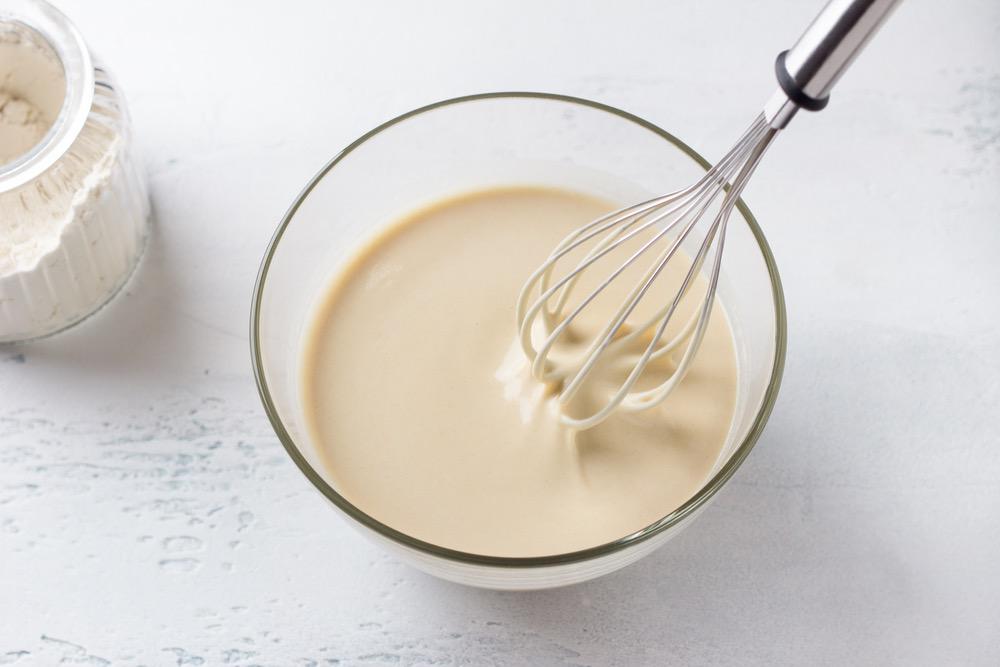
Lotion is made by combining a heated water phase and oil phase with an emulsifying wax.
Once the emulsion has formed and your lotion has cooled to the temperature called for in your recipe, generally around 100°F to 115°F, it's time to add the fragrance.
Adding fragrance while the lotion is still too warm can allow some of the scent to evaporate before the batch is finished. It can also interfere with an emulsion that's still coming together.
Mix Slowly
Pour the fragrance into the lotion gradually while stirring instead of adding it all at once.
This helps distribute the fragrance evenly throughout the batch and reduces the chance of concentrated pockets of fragrance.
Start with a Stable Emulsion
Fragrance oil isn't water soluble, so a lotion with a weak emulsion is more likely to separate after fragrance is added.
If your base recipe struggles to stay together before fragrance is introduced, it's worth troubleshooting the emulsion first. Our emulsifying wax for lotion guide explains how to choose the right emulsifying wax and ratios for different lotion textures.
Watch How Your Fragrance Performs
Every fragrance oil behaves a little differently.
Some may thin a lotion slightly or cause minor separation over time, particularly near the upper end of their approved usage range.
If you notice a change in texture, don't assume the batch is ruined. Let the lotion fully set before evaluating it, then try a slightly lower fragrance percentage the next time you make the recipe if needed.
Getting the timing right, and starting with a stable lotion base, goes a long way toward creating a finished product that stays smooth from the first use to the last.
Frequently Asked Questions
Is fragrance oil safe for skin?
Some fragrance oils are approved for skin use, while others are intended only for products like candles or diffusers. Before using a fragrance oil in lotion or another leave-on product, confirm it's skin-safe and check its IFRA Certificate for the approved usage rate.
How much fragrance oil should I use in lotion?
The correct percentage depends on the fragrance oil you're using. Check its IFRA Certificate, calculate the fragrance based on your total batch weight, and stay within the approved leave-on limit.
What is a skin-safe fragrance oil?
A skin-safe fragrance oil has been approved for use in products that remain on the skin, such as lotion, body butter, body oil, and lip balm. Its IFRA Certificate lists the maximum recommended usage rate for each application.
Can fragrance oil irritate skin?
A fragrance oil may increase the chance of irritation if it isn't approved for skin use or if it's used above its recommended IFRA limit. Choosing a skin-safe fragrance, following the IFRA guidelines, and patch testing a new batch on a small area can help reduce that risk.
Start with the Right Fragrance Oil
Making lotion is all about the details, and fragrance is one of the final touches that brings the whole recipe together. Taking a few minutes to confirm a fragrance oil is approved for leave-on products and measuring it carefully helps set you up for consistent results every time you make a batch.
, or explore our carrier oils guide to learn more about building your lotion base. If you're planning a full body care collection, our fragrance oils (pillar) guide shows how the same fragrance can be used across different projects.