Fragrance Oils: How to Choose and Use Them
Fragrance oils are why your favorite candle smells like a bakery instead of a bucket of wax, and why a bar of soap made with just a few dollars in materials can smell like it belongs in a high-end boutique.
They can also be the reason a project falls flat. If you've ever poured a fragrance into a candle or soap only to wonder where the amazing scent from the bottle went, you're not alone. Nobody hands you the rulebook when you buy your first fragrance oil.
This guide is that rulebook. We'll cover what fragrance oils are, how they differ from essential oils, how to choose the right one for candles, soap, lotion, diffusers, or perfume, and how much to use so your finished products smell as good as you expected. Everything else we've written about fragrance builds on these basics, and we'll link to those resources throughout the guide.
Jump to:
- What Are Fragrance Oils (and What Are They Made Of)?
- Fragrance Oils vs. Essential Oils
- How to Choose a Fragrance Oil
- How to Use Fragrance Oils Safely
- Types of Fragrance Oils
- FAQ
What Are Fragrance Oils (and What Are They Made Of)?
Fragrance oils are carefully blended mixtures of aromatic ingredients designed to create a specific scent. Unlike essential oils, which come directly from plants, fragrance oils combine naturally derived ingredients with safe synthetic aroma compounds to recreate everything from fresh-cut peaches and vanilla frosting to ocean air and cozy cashmere.
That blend is what makes fragrance oils so versatile. Some scents simply don't exist in nature, and others would be impossible to produce consistently using only natural ingredients. Fragrance oils let perfumers recreate those scents while making sure every bottle smells the same as the last.
If you've ever wondered why your favorite candle smells exactly the way it did the last time you bought it, that's why. A well-made fragrance oil is designed for consistency, so bottle number 400 smells just like bottle number one.
Every quality fragrance oil should also include documentation showing how it can be used safely. At Nature's Garden, every fragrance oil comes with an IFRA Certificate that outlines the maximum recommended usage rates for products like candles, soap, lotion, perfume, and more. It's one of the most important resources you'll use as a maker because it tells you exactly how much fragrance can be safely added to each type of project.
It's also important to remember that not every fragrance is approved for every application. A fragrance that performs beautifully in a candle may not be suitable for leave-on skincare products. Always check the IFRA Certificate before starting a new project.
Fragrance Oils vs. Essential Oils
Fragrance oils are built. Essential oils are grown. That's the biggest difference, and it explains almost everything else.
Essential oils are extracted directly from plants like lavender, peppermint, eucalyptus, or lemon. Because they're natural products, their scent can vary from harvest to harvest depending on growing conditions, weather, and other factors.
Fragrance oils are created by perfumers using a blend of naturally derived ingredients and synthetic aroma compounds. That formula stays the same, so today's bottle smells just like the next one. For makers, that consistency is a huge advantage when you're creating products you expect to smell the same every time you make them.
Performance is another important difference. Many fragrance oils are formulated to hold up well in applications like candles, soap, and other bath and body products. Some essential oils perform beautifully too, but others can fade or change during the heat of candle making or the soap-making process.
Then there's the scent selection. Essential oils can only smell like the plants they come from. Fragrance oils can capture those natural scents, but they can also recreate bakery treats, beach vacations, your favorite perfume, or that fresh-laundry scent everyone somehow recognizes. If you can imagine it, there's a good chance someone has created a fragrance oil for it.
Neither option is better in every situation. If you're making an aromatherapy blend or want a single botanical ingredient, essential oils are often the right choice. If you're looking for consistent performance, a wider variety of scents, and reliable results across candles, soap, lotions, and more, fragrance oils are usually the better fit.
Cost is worth considering, too. Essential oils are priced based on how much plant material it takes to produce them, which means some can be surprisingly expensive. Fragrance oils are formulated rather than harvested, making it easier to offer a wide variety of scents at more consistent prices.
Want to learn more about the plant-based side of things? Check out our guide to essential oils vs fragrance oils.
How to Choose a Fragrance Oil (by Project)
Finding a scent you love is only half the equation. Before adding any fragrance oil to your cart, make sure it's approved for the project you're making.
A fragrance oil that performs beautifully in a candle isn't automatically suitable for soap, lotion, or perfume. The product listing and IFRA Certificate will tell you exactly which applications it's approved for and the recommended usage rates for each.
For Candles
Candle fragrance oils are formulated to perform under the heat of burning wax. A great candle fragrance should deliver both a strong cold throw (how it smells before it's lit) and a hot throw (how it smells while burning).
Keep in mind that wax type matters, too. Soy, paraffin, coconut, and other waxes all hold and release fragrance a little differently, so a scent that performs beautifully in one wax may behave differently in another.
Before you buy, check that the fragrance oil is approved for candle making and review the recommended usage rate. For more inspiration, browse our guide to fragrance oils for candles.
For Soap
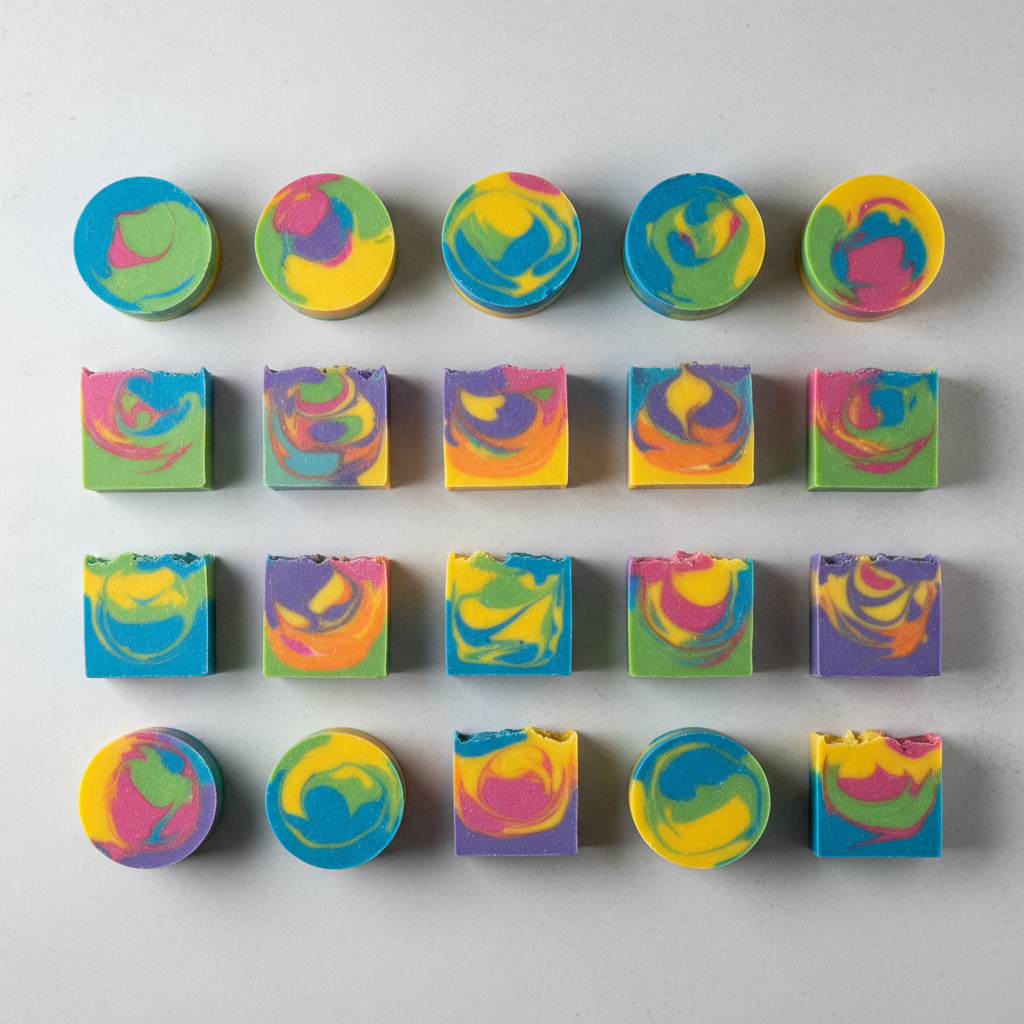
Soap making introduces a few extra variables. Some fragrance oils can speed up trace in cold process soap, while others may discolor over time because they contain ingredients like vanillin .
That's why it's helpful to read the fragrance notes and performance information before you start. At Nature's Garden, we share details like acceleration, discoloration, and other testing notes whenever they're available, so you know what to expect before you pour.
Looking for recommendations? Check out our picks for fragrance oils for soap.
For Diffusers and Home Scenting
Not every fragrance oil is designed for reed diffusers or other home fragrance products. Oils intended for diffuser use are formulated to perform properly in those applications, helping deliver a consistent scent throughout your space.
If you're making reed diffusers, room sprays, or other home fragrance products, choose a fragrance oil that's approved for that use. Browse our favorites in Fragrance Oils for Diffusers & Home Scenting.
For Lotions and Skincare
If a product will touch your skin, always choose a fragrance oil that's approved for skin-safe applications.
Before making lotions, creams, body oils, or other personal care products, check the IFRA Certificate for the maximum recommended usage rate. It's also a good idea to make a small test batch and patch test before producing larger quantities.
Learn more about skin-safe fragrance oils.
For Perfume
Making an oil perfume or an alcohol-based fragrance? Start with a fragrance oil that's approved for perfume applications.
Many makers pair these fragrance oils with carrier oils like jojoba or fractionated coconut oil for roll-ons and perfume oils, while others use cosmetic-grade alcohol to create spray perfumes.
Explore our recommendations in Fragrance Oils for Perfume.
How to Use Fragrance Oils Safely
Using the right amount of fragrance oil is just as important as choosing the right fragrance.
Every project has a recommended usage range, but the exact amount depends on both the application and the specific fragrance oil you're using. As a general starting point:
-
Candles: Typically 6 to 10% fragrance oil by weight of the wax.
-
Cold process and melt & pour soap: Typically 3 to 6% fragrance oil, depending on the formula and the fragrance's approved skin-safe limit.
-
Lotions and body products: Typically 0.5 to 3%, since products that stay on the skin have lower maximum usage rates.
-
Perfume oils: Often 15 to 20% fragrance oil blended with a carrier oil, depending on the desired strength.
These ranges are general guidelines, not guarantees. The IFRA Certificate for your specific fragrance oil is the final authority on how much can be safely used in each type of product. Always check the certificate before you start a new project.
For the most accurate results, weigh your fragrance oil instead of measuring by volume. Different fragrance oils have different densities, so a digital scale will give you much more consistent results from batch to batch.
Need help with the math? Our guide to How Much Fragrance Oil to Use walks through calculating fragrance load for candles, soap, lotions, and more.
More Isn't Better
It's tempting to think adding more fragrance oil will make your finished product smell stronger. In most cases, it won't.
Using more than the recommended amount can create problems instead. In candles, it can affect burn performance, increase sooting, or cause excess oil to seep from the wax. In soap and other bath and body products, too much fragrance can affect performance or exceed safe usage limits.
The goal isn't to use the most fragrance oil. It's to use the right amount.
Don't Skip the Patch Test
If you're making products that will be applied to the skin, always patch test the finished product before regular use.
Apply a small amount to the inside of your forearm and wait 24 hours to check for irritation. Even when a fragrance oil is approved for skincare applications and used within IFRA guidelines, patch testing is a smart final step before using or sharing your finished product.
Types of Fragrance Oils and Scent Families
One of the easiest ways to narrow down thousands of fragrance oils is to shop by scent family.
If you already know you love warm vanilla fragrances or bright citrus scents, you don't have to start from scratch every time you shop.
Here are some of the most popular fragrance families:
-
Floral: Rose, jasmine, lilac, lavender, peony, and other blooming botanicals.
-
Fruity: Apple, peach, strawberry, mango, pineapple, and other juicy fruit scents.
-
Fresh: Citrus, ocean air, rain, cotton, linen, and clean, airy fragrances.
-
Warm & Cozy: Vanilla, amber, sandalwood, cashmere, spice, and comforting blends.
-
Gourmand: Bakery-inspired scents like cookies, caramel, coffee, chocolate, marshmallow, and other sweet treats.
-
Woody & Earthy: Cedar, oakmoss, patchouli, pine, teakwood, and forest-inspired fragrances.
Most fragrance oils blend several families together. A fragrance might open with juicy peach, bloom into soft jasmine, and finish with warm vanilla. Knowing which family you naturally gravitate toward makes it much easier to discover new scents you'll love.
Understanding Fragrance Notes
You'll also notice that most fragrance oils include a note breakdown.
-
Top notes are the first scents you notice.
-
Middle notes make up the heart of the fragrance.
-
Base notes are the scents that linger the longest and give a fragrance its lasting character.
For example, a fragrance with bergamot as a top note, jasmine in the middle, and sandalwood in the base will usually open bright and citrusy before becoming more floral and eventually settling into a warm, woody finish.
Learning to read fragrance notes helps you look beyond the product name and get a much better idea of how a scent will actually smell.
Ready to explore? Browse our fragrance oils by scent family or application to discover your next favorite.
FAQ
What are fragrance oils made of?
Fragrance oils are blends of naturally derived ingredients and synthetic aroma compounds that are carefully formulated to create a specific scent. Unlike essential oils, they're made to deliver consistent fragrance, reliable performance, and the same scent from one bottle to the next.
Are fragrance oils safe for skin?
Some fragrance oils are safe for skin, but not all of them. Always check that a fragrance oil is approved for skincare applications and follow the maximum usage rates listed on its IFRA Certificate before using it in lotions, soaps, body oils, perfumes, or other personal care products.
What is the difference between fragrance oils and essential oils?
Fragrance oils are created by perfumers, while essential oils are extracted directly from plants. Fragrance oils offer greater scent variety and more consistent performance across projects like candles and soap, while essential oils are limited to the plants they come from and can vary from harvest to harvest.
How much fragrance oil should I use?
The right amount depends on what you're making. As a general guide, candles typically use 6 to 10%, soap 3 to 6%, lotions 0.5 to 3%, and perfume oils 15 to 20%, but you should always follow the usage limits listed on the IFRA Certificate for your specific fragrance oil.
Find Your Signature Scent
Ask ten makers for their favorite fragrance oil and you'll probably get ten different answers.
That's part of the fun.
Pouring candles, making soap, blending lotions, and creating home fragrance products all teach you something new about how a fragrance performs. Before long, you'll have a handful of favorites you reach for again and again.
Browse our fragrance oil collection by scent family or application, explore the guides linked throughout this article, and start experimenting. Your next favorite fragrance might be one click away.